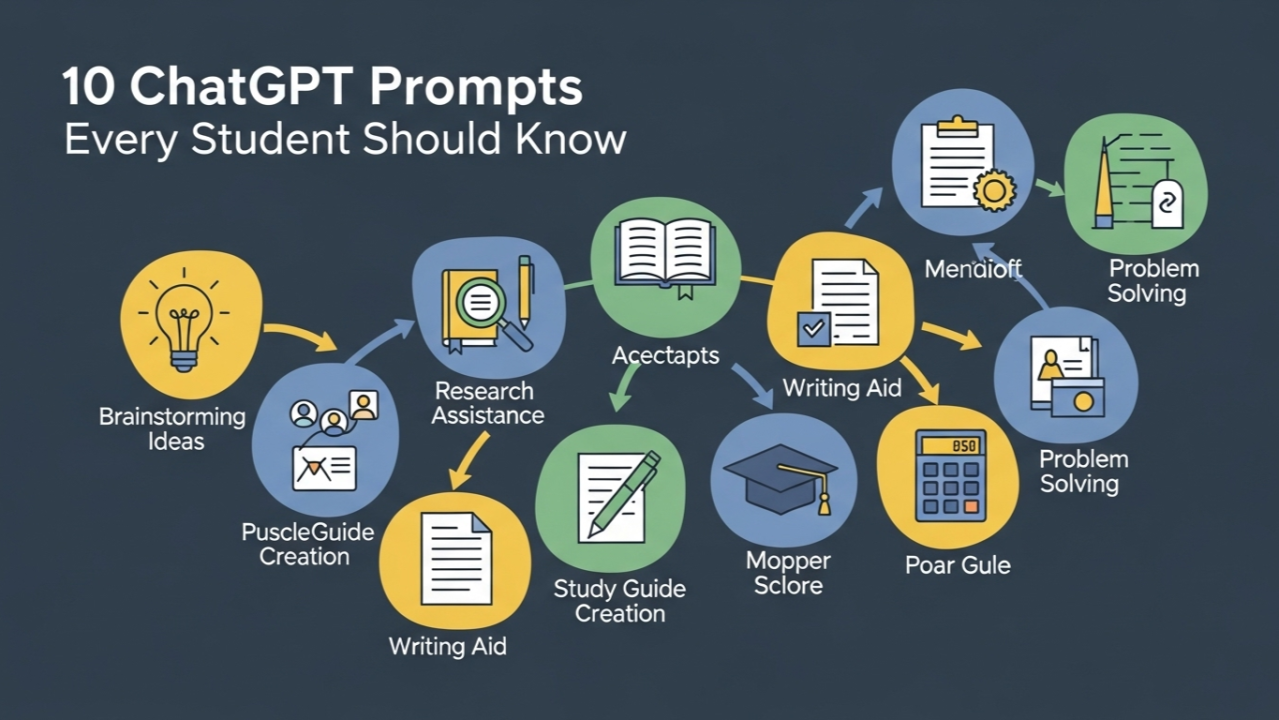
A quiet revolution is happening in classrooms, libraries, and dorm rooms across the United States. Students who once spent hours staring at blank screens are now completing research, organizing ideas, and improving academic writing faster than ever. The driving force behind this shift is not a new textbook or educational app. Instead, it is the growing popularity of chatgpt prompts for students assignments, a trend that is rapidly changing how learners approach schoolwork in 2026.
What began as a simple AI assistance tool has evolved into a powerful academic companion. From high school students preparing essays to college learners tackling complex research projects, customized prompts are helping users unlock better results with less frustration. As educators debate the future of AI in education, one thing is becoming clear: students are increasingly relying on smart prompting techniques to improve productivity, creativity, and learning outcomes.
Table of Contents
Why ChatGPT Prompts Are Trending Among Students
The rise of artificial intelligence in education has accelerated dramatically over the past year. According to multiple industry reports, AI-powered learning tools have seen record adoption across schools and universities in the United States. Among the most discussed trends is the use of chatgpt prompts for students assignments to generate ideas, organize information, and refine written work.
Students are discovering that the quality of AI-generated responses often depends on the quality of the prompt itself. Instead of asking broad questions, learners are creating detailed instructions that help AI deliver more accurate and useful results. This shift has created a growing online community where students share assignment prompts, essay frameworks, and study techniques designed specifically for academic success.
How Smart Prompts Are Changing Assignment Preparation
Traditional assignment preparation often involves multiple stages including brainstorming, research, outlining, drafting, and editing. Many students struggle during the early phases when they are unsure how to begin. This is where chatgpt prompts for students assignments are making a significant impact.
By using structured prompts, students can instantly generate topic ideas, create assignment outlines, and identify key discussion points. Rather than replacing learning, many users report that prompts help them overcome writer’s block and focus on understanding concepts. As a result, assignments that once felt overwhelming become more manageable and organized.
The Most Popular Assignment Prompt Categories in 2026
One reason the trend continues to grow is the versatility of AI prompts. Students are using them across multiple subjects and educational levels. Some of the most searched prompt categories include essay writing prompts, research paper prompts, literature review prompts, and critical thinking prompts.
Another fast-growing category involves project planning prompts. These help students break large assignments into smaller tasks and create realistic schedules. Education experts note that such organizational support can improve time management, reduce stress, and encourage more consistent academic performance throughout the semester.
Teachers Are Responding to the AI Prompt Boom
The widespread use of chatgpt prompts for students assignments has sparked conversations among educators nationwide. While some teachers initially expressed concerns about academic integrity, many are now adapting their teaching methods to accommodate AI-assisted learning.
Several schools and universities have introduced AI literacy programs that teach students how to use prompts responsibly. Instead of banning AI tools outright, educators are encouraging transparency and critical thinking. The focus is shifting toward evaluating a student’s understanding of a subject rather than simply assessing the final written product.
Assignment Quality Is Improving for Many Learners
Students who use effective prompts often report improvements in assignment structure, clarity, and organization. AI-generated guidance can help learners identify weak arguments, strengthen transitions, and present information more logically. These benefits are particularly valuable for students who struggle with academic writing.
However, experts emphasize that AI should function as a support tool rather than a replacement for original thinking. Successful students are those who review, edit, and personalize AI-generated content. This balanced approach allows learners to benefit from technology while maintaining authenticity in their work.
The Growing Demand for AI Study Tools
The popularity of chatgpt prompts for students assignments is closely connected to the broader rise of AI study tools. Digital learning platforms are increasingly integrating artificial intelligence features that assist with note-taking, summarization, and exam preparation.
Market analysts predict continued growth in educational AI adoption over the next several years. As schools invest in digital learning resources, students are expected to gain access to even more advanced tools designed to support academic achievement. This expanding ecosystem is creating new opportunities for personalized and efficient learning experiences.
Quick Facts About the Student AI Trend
Recent educational technology data highlights several notable developments shaping the current landscape. Millions of students now use AI-powered tools regularly as part of their study routines. Search interest related to academic prompting has also increased significantly throughout 2025 and into 2026.
Another interesting trend is the rise of prompt-sharing communities. Students frequently exchange successful prompt templates through forums, study groups, and social media platforms. These communities are helping users discover new ways to improve research quality, writing efficiency, and assignment outcomes while learning from peers across the country.
Future Predictions for AI-Powered Assignments
The future of education appears increasingly connected to intelligent digital assistance. Analysts expect chatgpt prompts for students assignments to become even more sophisticated as AI models continue to improve. Future systems may provide personalized recommendations based on a student’s learning style, academic level, and subject requirements.
Educational institutions are also likely to develop clearer guidelines regarding AI usage. Rather than focusing solely on restrictions, schools may create frameworks that encourage ethical and productive AI integration. This approach could help students develop valuable digital literacy skills that remain relevant throughout their academic and professional careers.
Why Students Must Learn Prompt Engineering Skills
Prompt engineering is emerging as one of the most valuable skills for modern learners. Understanding how to communicate effectively with AI systems can dramatically improve the quality of responses and educational outcomes. As technology becomes more integrated into classrooms, students who master prompting techniques may gain a significant academic advantage.
Beyond assignments, prompt-writing skills can support research, problem-solving, presentation creation, and career development. Many experts believe that prompt engineering will become a core digital competency similar to internet research and information literacy. Students who begin learning these skills today may be better prepared for future workplace demands.
The Balance Between Technology and Original Thinking
Despite the excitement surrounding AI tools, educational leaders continue to stress the importance of independent thought. The best outcomes occur when students use AI to support learning rather than bypass it. Effective prompting should encourage deeper understanding, not simply faster completion of assignments.
As the discussion around AI in education evolves, students are learning that technology works best when paired with curiosity, creativity, and critical thinking. Those who combine human insight with intelligent tools are likely to achieve the strongest academic results while developing skills that extend far beyond the classroom.
The rapid growth of chatgpt prompts for students assignments signals a major shift in how students learn, research, and complete coursework in 2026. Whether viewed as an educational breakthrough or a transformative study aid, the trend is reshaping academic habits across the United States. Students, educators, and institutions that embrace responsible AI usage may be best positioned to thrive in the next era of digital learning. If you want to stay ahead of emerging education trends, now is the time to explore how smart prompting can enhance learning while preserving originality and academic integrity.